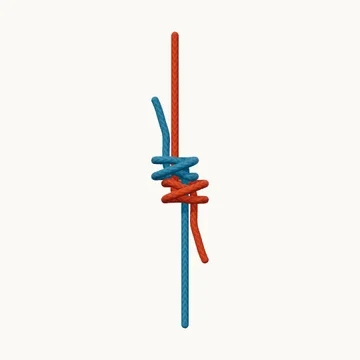
Double Fisherman’s

Double Fisherman’s
Preparing the rope…

Start with two ends

1/7

The ropes approach from opposite directions. Both ends move together in this demonstration.

Loops & Ropework · 7 steps

Join two rope ends with a double overhand knot around each opposing line.

Also known as Grapevine bend, Double fisherman’s bend.

A double fisherman’s bend consists of two double-overhand barrels, each tied around the other rope. Pulling the standing parts brings the barrels together. The separated teaching view lets you inspect each half before they meet.

The connection is common in cord loops because the two halves make a compact join. It can become difficult to undo after loading, so choose a different bend when frequent untying is important. Both barrels need their complete two-turn return.

When to use it

Join cord ends to make a loop.

Keep in mind

Can jam after loading. Leave enough tail beyond each dressed barrel.

Check your knot

  • Each barrel has two turns.
  • Each return passes inside its own turns around the other rope.
  • The barrels face one another and both tails remain visible.
How to tie Double Fisherman’s
  1. Start with two ends

    The ropes approach from opposite directions. Both ends move together in this demonstration.

  2. Overlap the ropes

    Lay the ends alongside each other, pointing in opposite directions.

  3. Make the first wraps

    Wrap each working end around the opposite rope.

  4. Add the second wraps

    Make another turn in the same direction. The strands cross at the front.

  5. Thread both turns

    Bring each end back through its own pair of turns.

  6. Bring out the ends

    Each tail exits through the two turns, pointing away from the other knot.

  7. Bring the knots together

    Pull the standing ropes apart so the two double overhands slide together. Leave both short tails visible.

Explore the 3D steps
References & further reading