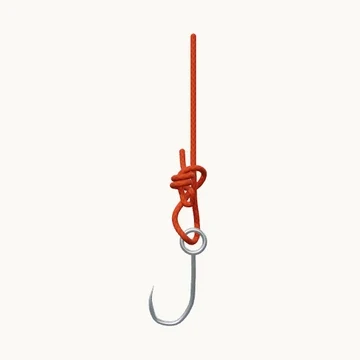
Tie to an eye through a first opening, then make two passages through the new loop.
The Orvis knot uses a sequence of openings rather than a long band of standing-line wraps. After passing the eye and circling the standing line, the end goes back through the first opening. That movement creates a new loop, which receives the next two passages.
Keep the new loop separate while learning. Repeatedly using the original eye-side opening makes a different arrangement. The loose model shows the small ladder-like crossings before the body is drawn toward the attachment.
When to use it
- Attach suitable fishing line to a hook or fly eye.
- Practice distinguishing the original loop from a newly formed opening.
Keep in mind
Draw the knot down gradually so the crossings organize correctly. Line type and careful seating matter; test before cutting the tag short.
Check your knot
- The first return goes through the initial opening.
- Both following passes use the new loop.
- The end stays outside the eye when the body is seated.