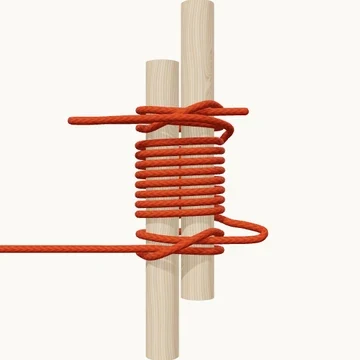
Bind overlapping spars with close wraps and clove-hitch finishes.
Also known as Vertical lashing.
A round lashing holds two overlapping spars alongside one another. A clove hitch starts the binding around both spars, close turns cover the overlap, and another clove secures the end. This method has no frapping turns between the wood.
The lesson shows a single band with eight wrapping turns. Extending a spar usually calls for two separated lashings, since one band can leave a pivot point. The amount of overlap, spacing and rope choice belong to the design of the complete assembly.
When to use it
- Join overlapping spars in a light camp structure.
- Compare a no-frap binding with shear and square lashings.
Keep in mind
One tidy lashing is not a complete spar-extension design. Use sufficient overlap and correctly spaced bindings, and test the whole structure for its intended load.
Check your knot
- Both clove hitches surround the pair of spars.
- The wrapping turns lie beside one another.
- No fraps separate the spars inside the band.