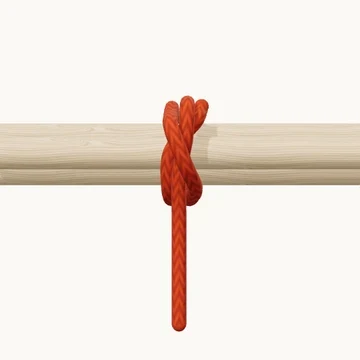
Constrictor Knot

Constrictor Knot
Preparing the rope…

Start below the bundle

1/8

Bring the end up in front of the round sticks.

Camping · 8 steps

A tight binding knot for gathering or clamping material.

Also known as Constrictor knot.

The constrictor is a binding knot that traps its ends beneath a crossing turn. It resembles a clove hitch at first, but the extra interlocking tuck makes a much firmer binding. A curved support allows the knot to squeeze and hold its own crossing.

It is useful where the binding can stay in place or be cut away afterward. Do not confuse that purpose with an attachment that should release readily. On an unsuitable flat or irregular surface, the knot may not develop the same grip.

When to use it

Close a sack; bind a bundle; temporarily stop a rope end from fraying.

Keep in mind

Needs a curved surface and can be very difficult to untie.

Check your knot

  • The final tuck makes the interlock beneath the crossing turn.
  • The binding bears against a curved surface.
  • Both ends are drawn evenly to set it.
How to tie Constrictor Knot
  1. Start below the bundle

    Bring the end up in front of the round sticks.

  2. Approach the bundle

    Keep the standing part below as the end rises.

  3. Make the first turn

    Pass over the top, down behind, and back below the bundle.

  4. Cross over the front

    Bring the end diagonally up-left over the standing part.

  5. Wrap a second time

    Continue around the bundle beside the first turn.

  6. Thread beneath both strands

    Pass under the riding diagonal, then under the first front turn.

  7. Bring out the tail

    Bring the short end out above the bundle.

  8. Check the binding

    A half knot sits beneath the riding turn on the curved surface. This binding can be difficult to undo.

Explore the 3D steps
References & further reading